No Hype Required: The Quiet Neighbourhood Pie Shops That Are Holding Vancouver Together
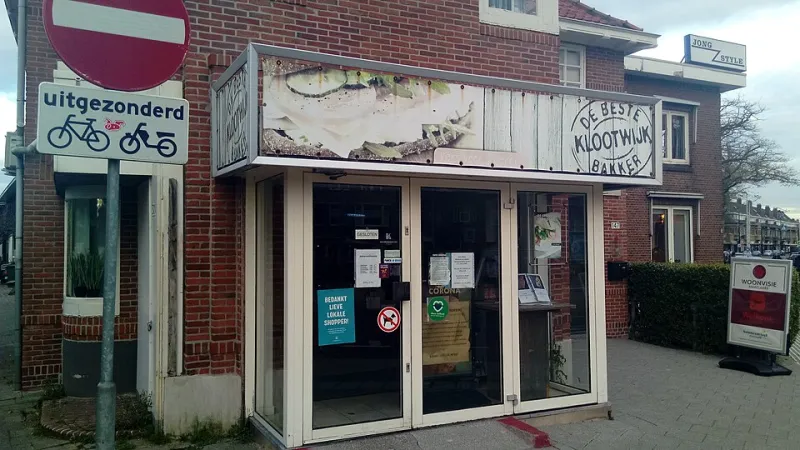
Photo: Donald Trung Quoc Don (Chữ Hán: 徵國單) - Wikimedia Commons - © CC BY-SA 4.0 International.(Want to use this image?)Original publication 📤: --Donald Trung 『徵國單』 (No Fake News 💬) (WikiProject Numismatics 💴) (Articles 📚) 20:53, 30 January 2021 (UTC), CC
Some bakeries announce themselves. Neon signage, a curated aesthetic, a social media presence that's basically a part-time job. You know the type, and honestly, fair enough — it's a competitive city.
But then there are the other ones.
The shop that's been on the same corner for thirty years, run by the same family, with a handwritten chalkboard menu that hasn't changed much since the nineties. The woman who bakes out of a small commercial kitchen and sells through word of mouth and a waiting list her regulars guard jealously. The retired schoolteacher who started selling pies at the farmers' market on weekends and somehow ended up with a storefront.
These are the places that don't make the trending lists. They're not chasing the algorithm. And yet, if you ask the people who live nearby, they'll tell you these bakeries matter more to their neighbourhood than almost anything else on the block.
We went looking for them. Here's what we found.
The Shop That Remembers Your Order
There's a particular kind of relationship that develops between a neighbourhood bakery and its regulars that has almost nothing to do with the food itself — though the food is usually very good.
It's the fact that someone knows your name. That they remember you take your apple pie with extra cinnamon, or that you always buy two meat pies on Fridays because your husband doesn't cook. That they ask about your kid's hockey tournament or your mother's hip surgery.
This kind of intimacy is increasingly rare in a city that's grown as fast as Vancouver has. Neighbourhoods that were tight-knit communities twenty years ago have seen enormous turnover — new condos, new residents, new businesses cycling in and out. Against that backdrop, a bakery that's been in the same spot for a long time becomes something more than a place to buy pastry. It becomes a fixed point. A landmark that's actually still there.
Several of the bakers we spoke with used the word "anchor" without prompting. One woman who runs a small pie shop in East Vancouver described her regulars as "the people who make this neighbourhood feel like a neighbourhood." She's been open for eleven years. She knows most of her customers by first name. On the morning we visited, three different people stopped in not to buy anything but just to say hello.
Techniques Passed Down, Not Googled
One thing that strikes you when you talk to bakers at these smaller, older shops is how differently they learned their craft.
There's no culinary school certificate on the wall. No YouTube channel they followed. For many of them, the knowledge came from a parent or grandparent, often in a kitchen far from Vancouver, in a country where pie looked different and meant something different.
A baker originally from the Philippines described learning to make her signature ube custard pie from her lola, adapting the recipe over years to work with ingredients available in Canada. Another, whose family came from the UK, makes a steak and kidney pie using her father's recipe — a recipe he kept in his head and passed down verbally, which she now keeps in her head and is slowly teaching to her daughter.
These techniques aren't documented anywhere. They live in hands and memories and kitchens. And they produce results that are genuinely distinct from what you'd get at a bakery following a recipe sourced from a cookbook or a food blog. There's variation, imperfection, and character built in.
"My crusts are never exactly the same twice," one baker told us, laughing. "My mom's weren't either. That's how you know it's real."
What Makes a Gathering Space
Several of the shops we visited had something in common beyond the quality of their pies: people lingered.
Not in a coffee-shop-with-laptops way. In a standing-around-the-counter-talking way. In a the-baker-comes-out-from-the-back-to-join-the-conversation way. These shops function as informal community hubs in a way that feels almost old-fashioned, and also kind of essential.
One shop in the Hastings-Sunrise area has a small table near the window where a group of older men play cards on Tuesday mornings. They buy pie. They've been coming for years. The baker doesn't charge them for coffee anymore — she just makes a pot and puts it out. "They're part of the place now," she said. "I couldn't take them off the menu if I tried."
Another bakery in Marpole hosts an informal drop-in for newcomers to the neighbourhood every few months — not an organized event, just an open invitation passed around through the local community association. People show up, eat pie, and meet each other. The baker didn't plan for her shop to serve this function. It just happened.
This is what community anchoring actually looks like. It's not a strategic initiative. It's the accumulated effect of showing up, day after day, making something good, and treating people like they matter.
The Regulars Who Keep Them Going
Every small bakery we visited mentioned the same thing when we asked what keeps them in business: their regulars.
Not viral moments. Not favourable reviews (though those help). Not new customers finding them through social media. The regulars. The people who come in every week, sometimes more. Who buy extra at holidays. Who bring their visiting relatives in. Who tell their neighbours.
This is a different kind of loyalty than the kind that comes from hype. Hype is fast and fickle. This kind of loyalty is slow and durable, and it's built through consistency and trust over a long period of time.
"I have customers who've been coming since I opened," said one baker who's been running her shop for nearly fifteen years. "Their kids were little then. Now the kids bring their kids. That's the whole thing, right there."
How to Find Them (And Why You Should)
These shops don't advertise much. Some have websites; many don't. Some have social media accounts that haven't been updated in two years. You find them by walking your neighbourhood slowly, by asking the person at the farmers' market who made the pie you just ate where they bake, by listening when a neighbour mentions a place they love.
When you do find one, go back. Bring someone. Tell people. Buy the extra pie.
Vancouver's food scene gets a lot of attention for its innovation, its ambition, its willingness to push things forward. All of that is real and worth celebrating. But the bakeries that are quietly holding neighbourhoods together — the ones doing the slow, unglamorous, deeply human work of just being there — those are worth celebrating too.
Maybe more.