Crust Divided: Why Vancouver Families Can't Agree on What Goes Inside a Pie
There's a question that has quietly divided Vancouver kitchen tables for generations, and it doesn't involve politics, sports, or whether the Canucks will ever win the Cup. It's this: is pie a dessert, or is it dinner?
Depending on who you ask — and where their family came from — the answer is obvious. Completely, non-negotiably obvious. And yet, somehow, no two people seem to give the same one.
The Dessert Camp Is Not Backing Down
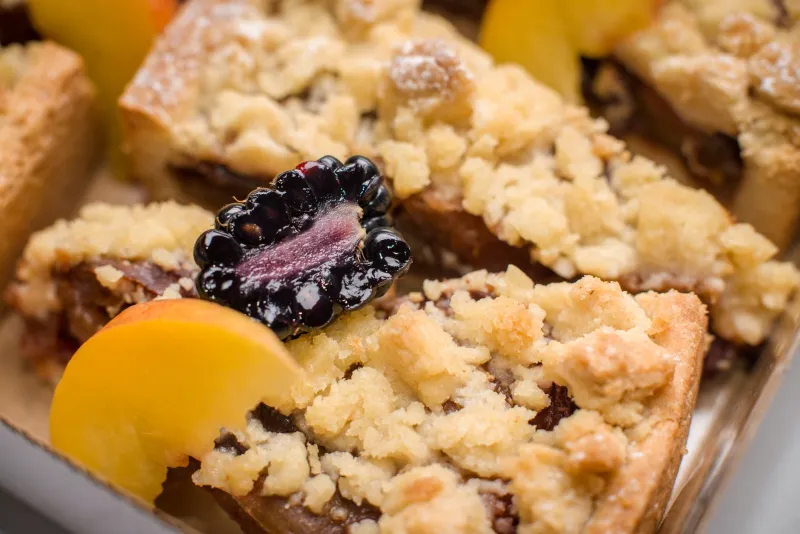
For a lot of Vancouverites who grew up in families with roots in the Pacific Northwest or the Canadian Prairies, pie means one thing: fruit, sugar, and a golden crust that shatters when you press a fork into it. Saskatoon berry. Sour cherry. Apple with a crumble top. These are the pies that sit on counters after Sunday dinners, the ones that get wrapped in foil and dropped off at a neighbour's door when something goes wrong.
Margaret Osei, a home baker who's lived in East Van for nearly three decades, is firmly in this camp. "When I think of pie, I think of my mother's peach pie," she says. "She'd make it every August when the Okanagan peaches came in. It was the whole point of summer." For Margaret, the idea of calling a meat-filled pastry a "pie" isn't wrong exactly — she just thinks it's a different thing entirely. "That's a pasty. Or a turnover. Pie is sweet. That's the deal."
She's not alone. A significant portion of Vancouver's baking community treats fruit pie as the gold standard, the platonic ideal that every other pastry is quietly measured against. Walk into almost any bakery in Kitsilano or South Granville on a Saturday morning and you'll find the sweet side of the argument winning by sheer volume — blueberry, rhubarb, lemon curd, and the occasional wild card like cardamom pear.
The Savoury Side Has History on Its Side
But spend any time in East Vancouver's Filipino community, or at a Jamaican takeout spot in Surrey, or at a dim sum table in Richmond, and the sweet-pie-only argument starts to look a little parochial.
For many of Vancouver's immigrant communities, savoury pastry isn't a side note — it's the main event. Jamaican beef patties. Filipino empanadas. Chinese char siu bao. West African meat pies. These are the foods that mothers and grandmothers made when they wanted to feed people properly, and they carry the same emotional weight that a blueberry pie does for someone whose family has been in BC for five generations.
Roland Aquino, who runs a small Filipino catering operation out of his home in Burnaby, grew up eating empanadas at every family gathering. "For us, a meat-filled pastry is the comfort food," he explains. "When my lola made empanadas, that was love. That was a celebration. The idea that savoury doesn't count as 'real' pie is honestly a bit funny to me."
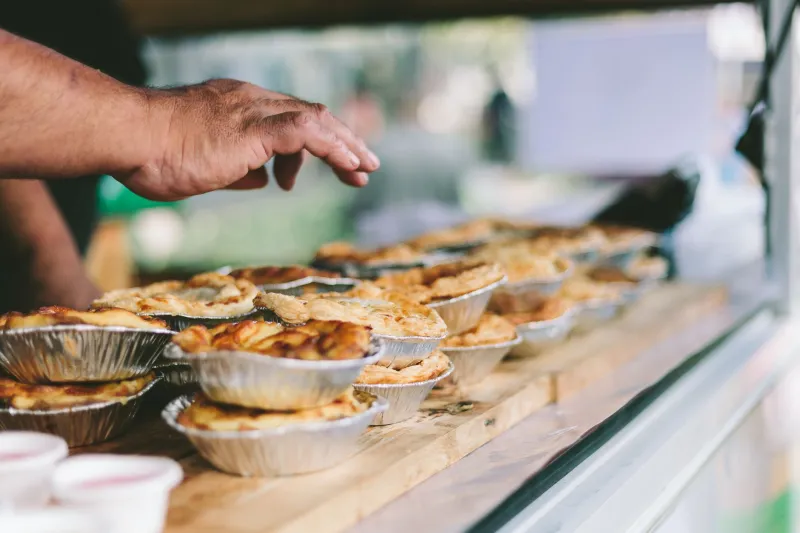
And then there are the British Columbia families with UK heritage, for whom the humble pot pie — chicken, beef, or lamb, sealed under a thick shortcrust lid — has never needed defending. It's just dinner. It's always been dinner. The argument that pie should be sweet is, from their perspective, the revisionist position.
What Vancouver's Bakers Actually Think
Professional bakers tend to be more diplomatic about the whole thing, mostly because they're selling to both camps simultaneously. But even they have opinions.
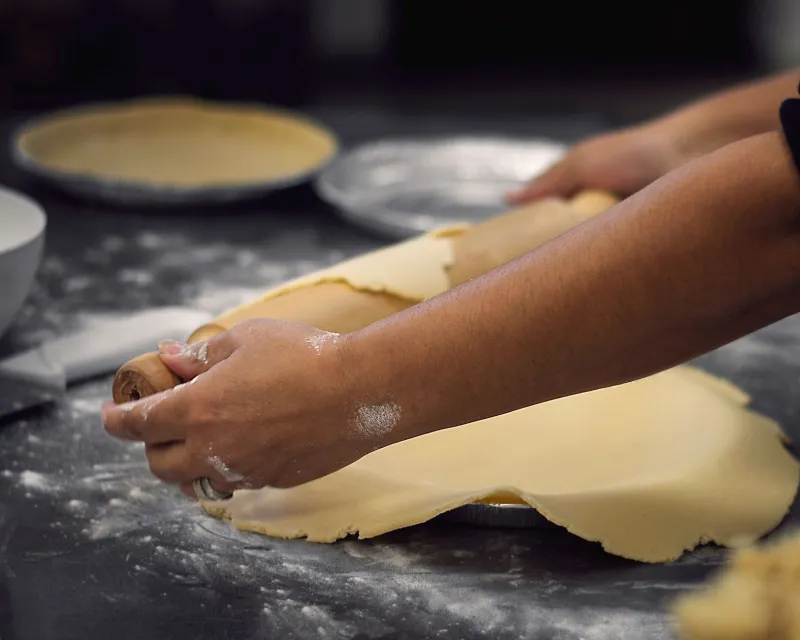
Nadia Kowalczyk, who bakes out of a shared kitchen space in Mount Pleasant and sells at the Trout Lake Farmers Market, says the debate is one she navigates every single week. "I make both. I have to. But if you ask me what I love making, it's savoury. A really good chicken and leek pie with a properly laminated crust? That's technically satisfying in a way that fruit pies aren't."
She pauses. "Don't tell my regular customers I said that. Half of them only come for the butter tarts."
At the other end of the spectrum, James Whitfield, who operates a small pie counter inside a Commercial Drive café, has built his entire menu around the conviction that sweet is supreme. "I don't do savoury," he says simply. "I tried it for a season. It confused people. They'd come in expecting dessert and leave feeling like they'd had lunch. Now I just do what I do and people know what they're getting."
The Families Who Can't Agree
Maybe the most interesting version of this debate isn't happening in bakeries at all — it's happening at dinner tables, especially in households where two different food traditions have merged.
Take the Nguyens in Coquitlam. Dad's family is Vietnamese-Canadian; Mum's family has roots in the Scottish Highlands by way of Nova Scotia. Their annual Christmas gathering involves both a tourtière (Mum's side insists on it, having adopted the Québécois tradition somewhere along the way) and a bánh pâté chaud, a Vietnamese-French hybrid meat pastry that Dad grew up eating in Saigon. Neither side considers the other's contribution to be a "real" pie. Both sides are wrong, and both sides are right, and somehow Christmas still happens every year.
"We've stopped arguing about it," laughs their daughter Linh, who's currently studying culinary arts in Vancouver. "Now we just eat both and pretend the debate doesn't exist. Until someone brings it up. Which takes about four minutes."
What the Crust Actually Tells Us
The sweet vs. savoury debate isn't really about pastry technique or filling preferences. It's about where you came from, who taught you to cook, and what food meant in your household growing up. In a city as genuinely multicultural as Vancouver, that means there are dozens of equally valid answers to the question of what a pie is supposed to be.
And honestly? That's the best possible version of this argument to be having. A city where the pie debate is complicated by Cantonese roast pork pastries, Trinidadian doubles, Prairie saskatoon traditions, and British pot pie nostalgia is a city with an extraordinarily rich food culture — even if nobody at the table can agree on what to call it.
So next time you're at a Vancouver bakery and you find yourself instinctively heading for the sweet case or the savoury shelf, maybe pause for a second. Order the thing you didn't grow up with. Start your own argument.
The crust is big enough for all of us.