Twenty Minutes in the Rain: What Vancouver's Bakery Lines Are Really Serving
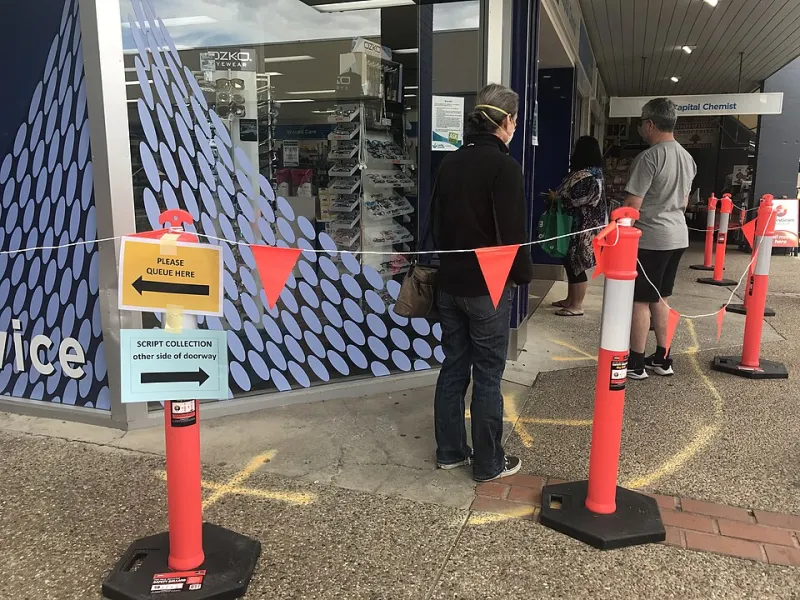
Photo: Suzy Nunes, CC BY-SA 2.0, via Wikimedia Commons
On a grey Saturday in November, the line outside a Mount Pleasant pie counter stretched past the window and bent toward the corner. Nobody looked especially put out. Two people were comparing notes on the pumpkin. A man in a rain shell was holding a spot for his partner, who had gone to find coffee. Somewhere near the front, a toddler in a stroller was being promised a hand pie the size of her fist.
This is now a familiar Vancouver scene. We are a city that complains about traffic, about bridge congestion, about the seawall being too busy — and then turns around and voluntarily joins a queue that doubles back on itself for the sake of a butter crust. The line has become part of the product.
The forecast is the dress code
Standing in line for food is hardly new here. What's changed is the shape of it. The pie lineup is slower and chattier than a coffee queue, more convivial than a brunch wait. There's no host taking names, no buzzer in your pocket. You're simply out there, in the weather, with strangers who made the same decision you did.
Regulars have quietly developed a schedule. The early crowd comes for the first bake, somewhere around opening, when the crimps are still warm and the fruit hasn't had time to slump. The second wave arrives mid-morning and finds the counter wiped out of the popular one. The wisest customers show up in the dead hour of mid-afternoon, when the staff are relaxed, the selection is thinner but interesting, and there's a decent chance of a slice going half-price before close.
And Wednesdays, several people told me, are the new Saturdays. "Everyone discovered the weekend," said one counter worker, wiping down a glass case. "Now the weekend is a tourist thing and the middle of the week is for people who actually live here."
What the people behind the counter learn
For owners, a queue is a live dashboard. They read it the way a fisher reads a tide.
"You can tell within ten minutes whether a bake went wrong," a baker on Commercial Drive told me. "If the line forms and doesn't move, we're behind. If it forms and then leaks away, we've priced something wrong or we're out of the thing they came for."
Most independent shops have developed small systems for this. A chalkboard that gets updated the moment a flavour sells out. A staff member working the door, taking pre-orders and letting people know the wait. A cap of two pies per customer on the first Saturday of the month, because otherwise a single reseller can clear a morning's work in fifteen minutes. Some counters now hold back a portion of each bake for walk-ins while the rest sits online, so the shop doesn't turn into a pickup window with an empty case.
The hardest part isn't the volume. It's the mismatch between what hype promises and what a small kitchen can actually deliver. A viral post can bring a hundred people to a shop built for forty. The crust doesn't speed up. Shortening a rest period ruins the texture. Pastry is a stubborn, patient business, and no algorithm has figured out how to make laminated dough set faster.
The etiquette nobody wrote down
There are rules to the line, and nobody handed them out. They tend to look like this:
- Know roughly what you want by the time you reach the counter. Asking to see everything, slowly, while nine people drip behind you, is a rookie move.
- Don't hold the line hostage for a photo shoot. The backlit latte-and-slice shot is lovely. Take it after you sit down.
- Ask the person behind you before you leave your spot to check on a friend. The honour system works right up until it doesn't.
- Don't trust the weather app to protect you. Bring the umbrella. Bring the second umbrella for the person who forgot theirs.
- If you got the last of something, don't announce it. Just be gracious about it.
When waiting stops being charming
Not every part of line culture is warm and fuzzy. A queue without an awning in February is a hard sell for anyone with mobility issues, a stroller, or a small kid. Neighbours on residential blocks have little patience for sidewalk crowds that spill into driveways and stay there. And there is a real, fair critique that a line can act as a moat: the people who already know about the shop wait happily, while the people who live across the street assume it's not for them.
The shops that manage this well tend to do unglamorous things. They put a bench out. They add an awning. They dedicate a quiet hour or a neighbourhood discount. They take phone pre-orders for people who can't stand outside. None of that makes for a good social media post, which is exactly why it matters.
The slice you waited for
Here's the honest reason the line survives: anticipation does something to taste. A slice eaten the moment it's handed over, standing on the sidewalk, is a fine thing. A slice earned through twenty minutes of drizzle and small talk about parking on Fraser Street is a better one. You've invested. You've committed. You've also, in some small way, joined a club.
That's what a neighbourhood bakery sells alongside the butter. Not exclusivity — community. A place where the person next to you is also getting rained on, also weighing the apple against the pear, also probably going to buy the coffee.
The pie is the point. The line is where you make your friends.