Warm Crust, Open Door: Why Vancouver Pie Shops Are the Wellness Spaces Nobody Planned For
Nobody walked into a pie shop and thought, this is my therapist's office now. And yet, here we are.
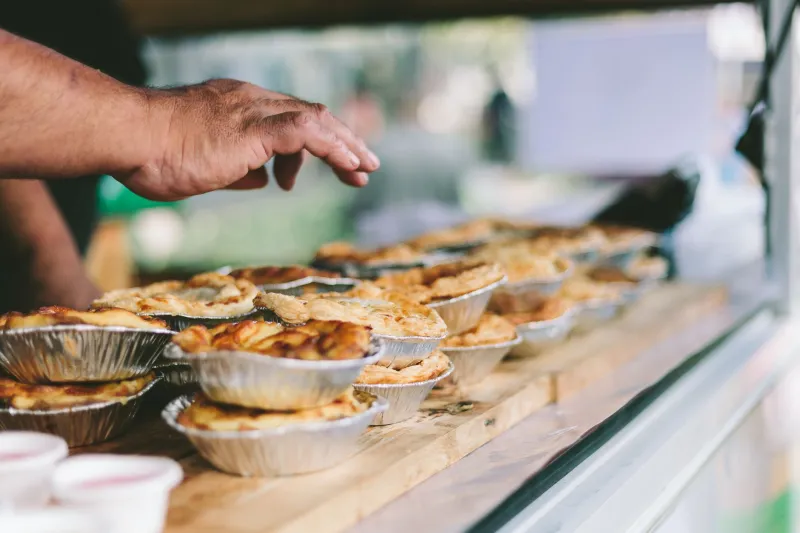
In a city where a single counselling session can run you $180 and a one-bedroom apartment takes most of your paycheque, Vancouverites have gotten creative about where they find comfort. Increasingly, that place has a glass display case, smells like browned butter, and charges you $6 for a slice of something that makes the world feel temporarily manageable.
This isn't a knock on therapy — not even close. But it is an honest look at what's quietly been happening inside Vancouver's independent bakeries, and why so many people are treating them like a third space that actually works.
The Ritual Is the Point
Psychologists have long talked about the power of ritual in emotional regulation. Predictable, sensory-rich routines — the kind that engage smell, taste, and touch — help anchor people during periods of stress or uncertainty. Pie, it turns out, hits a lot of those markers at once.
There's the warmth of the cup you're cradling. The smell of pastry that somehow signals safe. The act of sitting across from someone and sharing something you cut with a fork. These aren't incidental details — they're the whole mechanism.
"I started coming in every Thursday after my divorce proceedings," says Marguerite, a regular at a small East Vancouver bakery she's been visiting for two years. "I didn't plan it. I just needed somewhere to go that wasn't home and wasn't a bar. Now Thursday pie is basically non-negotiable. It's mine."
Marguerite isn't alone. Spend enough time talking to regulars at Vancouver's independent pie shops and you start hearing versions of the same story: someone stumbled in during a rough patch and never really left. Not because the pie fixed anything — but because the act of showing up, being recognized, and sitting still for a while did something useful.
Owners Who Noticed — and Leaned In
Some of Vancouver's bakery owners have clocked this dynamic and made intentional choices to support it, even if they'd never describe what they're doing as a wellness initiative.
Take the approach at a Kitsilano spot where the owner rearranged her seating layout specifically to create smaller, more intimate nooks — "not because it's trendy, but because people were clearly coming in alone and needing somewhere that didn't feel lonely." She's also trained her staff to remember regulars' orders and use their names. Small things, she says, but they matter.
"I'm not a therapist and I'm not pretending to be," she's quick to clarify. "But I do think there's something we can offer that's real. Consistency. Warmth. A place that's the same every time you walk in, which is a bigger deal than people admit."
Another owner in Mount Pleasant has quietly started hosting what he calls "open table" Sundays — no reservation, no agenda, just a long communal table where strangers can sit together if they want to. "It started because I had too many solo customers who looked like they needed company," he says. "Now it's become its own thing. People come specifically for it."
None of this is marketed. No Instagram campaigns, no branded wellness messaging. It just exists, and people find it.
What Makes Pie Specifically Good at This
You could make this argument about any café, sure. But there's something about pie culture specifically that lends itself to this kind of emotional function — and it has a lot to do with association.
Pie carries a memory load that most foods don't. It shows up at holidays, at grandparents' houses, at potlucks where everyone brought something. For many Canadians, it's embedded in the texture of belonging — which means eating it triggers something that goes deeper than hunger.
"There's real neuroscience behind comfort food," says one Vancouver-based registered counsellor who asked not to be named. "Foods associated with positive early memories can genuinely activate calming responses. It's not just nostalgia — it's your nervous system recognizing something familiar and safe."
She's careful to note that pie shops aren't a substitute for professional support when someone genuinely needs it. But she also doesn't dismiss the value of what she calls "ambient community" — the low-stakes, non-clinical experience of being around other people in a warm, welcoming space. "Not everyone has access to therapy. Not everyone wants it. But everyone needs somewhere to land."
The Budget Reality Nobody Wants to Ignore
Let's be honest about the economics here, because they matter.
Vancouver consistently ranks among the most expensive cities in Canada. For a huge portion of residents — renters, students, gig workers, new immigrants, people between jobs — traditional wellness options are simply out of reach. A yoga membership, a therapist, even a gym: these are line items that get cut first when money gets tight.
A slice of pie and a coffee? That's $10 to $12, and nobody's going to make you feel guilty for staying an hour.
"I think people underestimate how much the financial accessibility matters," says Marguerite. "I can't afford to see someone every week. But I can afford pie on Thursdays. And honestly? Some weeks it's what gets me to the weekend."
That's not a small thing to offer someone.
The Limits — and Why They're Worth Naming
To be clear: pie shops aren't mental health clinics, and nobody's saying they should be. There are real limits to what a warm room and a good crust can do for someone in crisis, and those limits matter.
But the conversation around wellness in Vancouver — and in Canada broadly — has started to widen in useful ways. Community, ritual, belonging, and the simple act of being seen are increasingly recognized as genuine contributors to mental and emotional health. The bakeries that are quietly providing those things aren't doing something frivolous. They're filling a gap that formal systems haven't figured out how to close.
And they're doing it one slice at a time, which feels very Vancouver.
Where to Start
If you're curious about which shops in the city have cultivated this kind of atmosphere, the honest answer is: look for the ones with mismatched chairs, staff who say your name, and a lineup that moves slowly because people aren't in a hurry to leave. Those are your places.
They're not hard to find if you know what you're looking for. And once you find yours, you'll probably keep going back — not just for the pie, but for everything else that comes with it.
That's the whole thing, really. The pie is just how it starts.